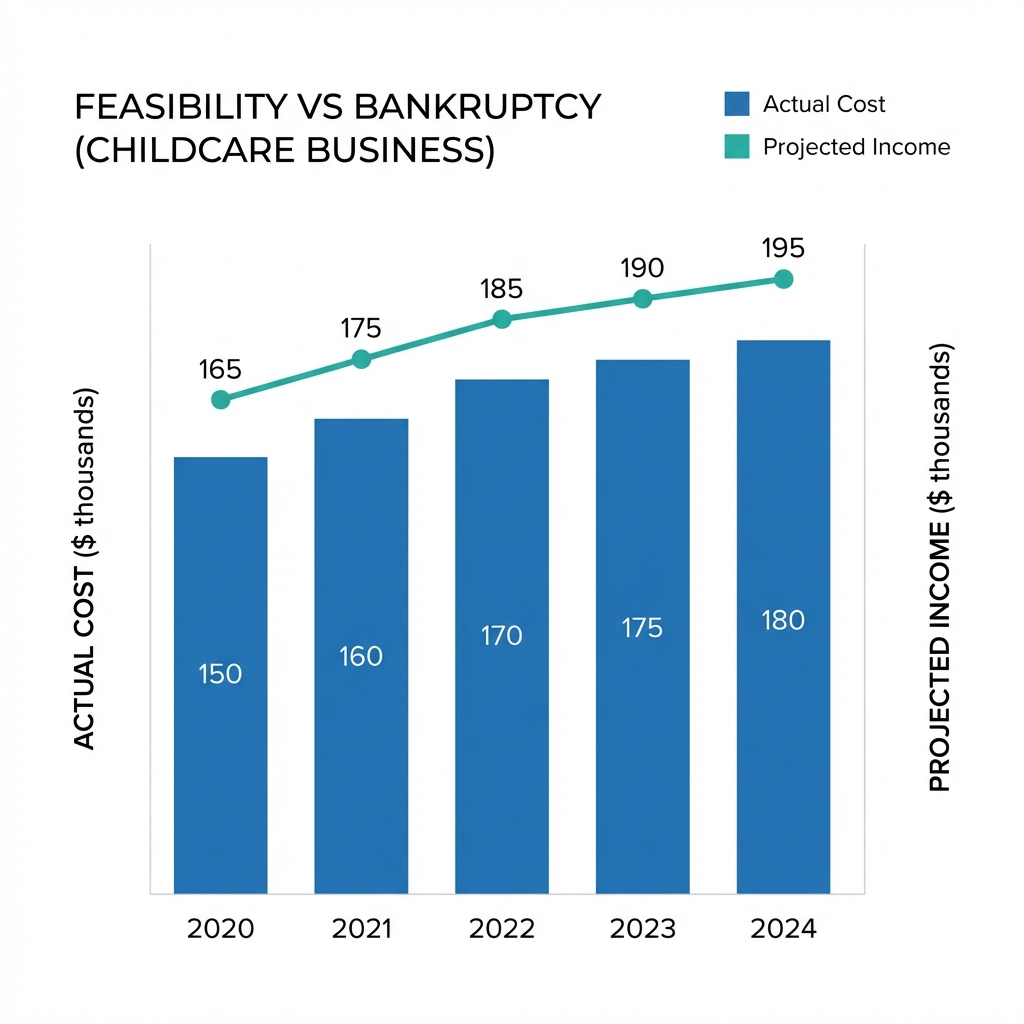

Daycare Business Plan: The Feasibility Template for Startups
Most aspiring owners think a daycare business plan is a 50-page document you hand to a bank officer in a suit.
This is why 80% of them never open.
In 2026, a business plan isn’t about funding; it’s about feasibility. It is the math that tells you whether your dream of owning a center will replace your salary or drain your savings. Before you look for a loan, you must validate the idea for yourself.
The Feasibility Gap
Data shows that 40% of childcare startups fail in their first year. The cause isn’t “bad curriculum” or “poor location.”
It is undercapitalization.
Aspiring owners consistently underestimate the “hidden” startup costs:
- Renovation Gap: Averages $15,000 over budget.
- Licensing Delays: 4-6 months of “dead rent” before revenue starts.
- Ratio Miscalculations: Overstaffing looks like “quality,” but mathematically ensures a -10% profit margin.
You don’t need a wordy document. You need a Feasibility Model that answers one question: Will I go broke?
Phase 1: The “Break-Even” Analysis
Your business plan begins with occupancy. Most templates assume you will open with 80% of your seats full.
The Reality: New centers take an average of 8 months to reach break-even occupancy without a paid waitlist strategy.
If your rent is $4,000/month, and you open with 5 kids, you are losing money every single day. A feasibility plan calculates your Cash Burn Rate: how much cash you need in the bank to survive those first 8 months.
Phase 2: The “Ratio” Profit Model
In childcare, your biggest expense is labor (55-65% of revenue).
A “template” business plan might say: “We will have low ratios to ensure high quality.” A Feasibility Plan calculates the cost of that promise.
- Standard Ratio (1:4): Revenue = $4k. Labor = $2.5k. Profit = Healthy.
- “Quality” Ratio (1:3): Revenue = $3k. Labor = $2.5k. Profit = Zero.
Small changes in your classroom structure destroy your ability to pay yourself. You must model this before you sign a lease.
Phase 3: The Income Validation
The final part of your plan is the most personal. Does this business pay you?
Home daycares average $40k - $60k in annual revenue. Centers can scale to $450k+, but come with 10x the risk. Which model fits your life?
Don’t guess. Banks reject applications that lack specific, data-backed financial projections. But more importantly, you should reject any business idea that relies on “hope” instead of math.
Conclusion: Math over Myths
A business plan is not a homework assignment for a bank loan officer. It is the roadmap for your life’s savings. The most successful owners are the ones who respect the math enough to listen to it before they sign a lease.
If the numbers work, the dream works. If they don’t, the best business decision you can make is to pause, pivot, and plan again until they do.