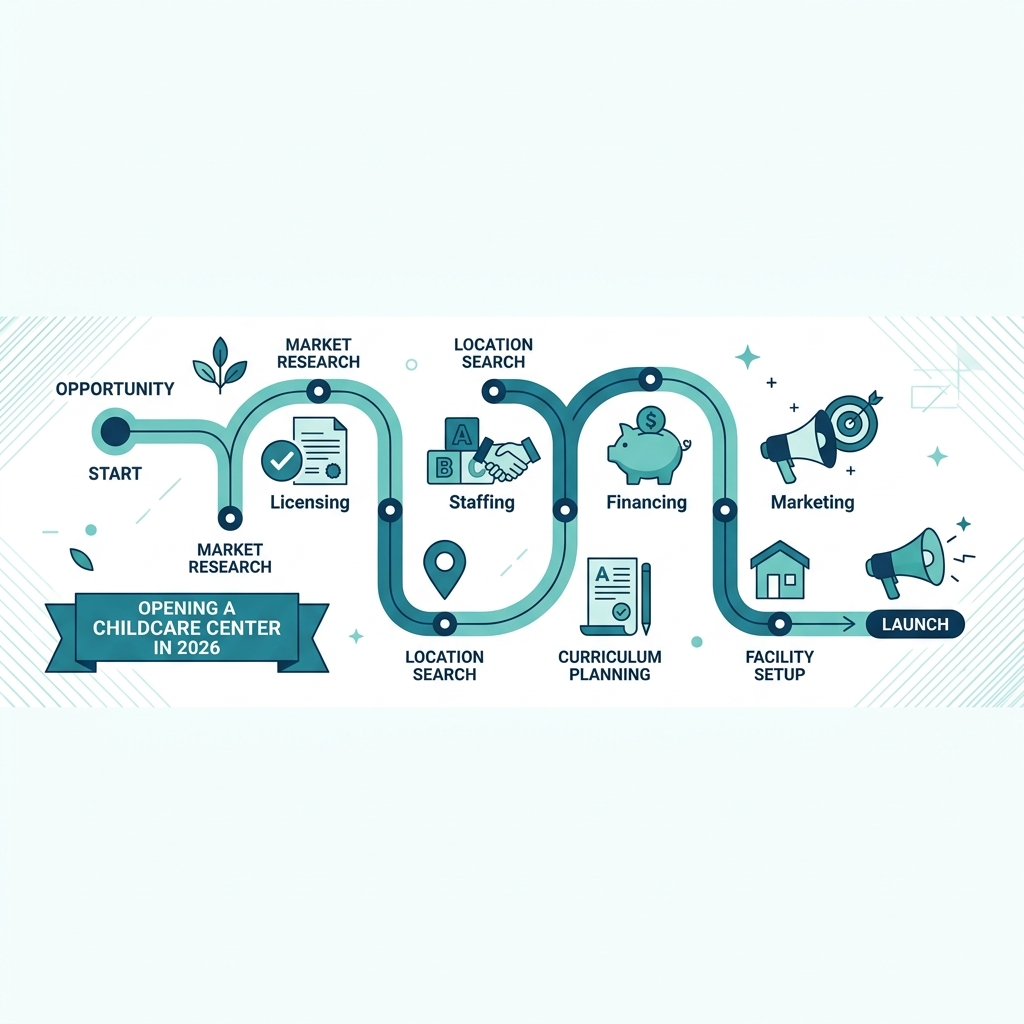

Opening a childcare center is a high-impact business venture that requires balancing rigorous regulatory compliance with the operational demands of early childhood education. As of 2026, the industry is seeing a shift toward tech-integrated management and stricter safety protocols.
Here is your roadmap to navigating the market entry process.
1. Market Research and Feasibility
Before signing a lease, you must validate the demand in your specific zip code.
- Analyze Supply vs. Demand: Use local census data to identify the number of children under age 6 in your target area. A ratio of more than 3 children per available licensed slot indicates a high-demand market.
- Competitive Audit: Map out existing centers. Note their tuition rates, operating hours, and waitlist lengths. As of early 2026, the national average for full-time center-based care ranges from $1,200 to $2,400 per month, depending on the cost of living in your region.
- Financial Modeling: Calculate your “break-even” enrollment. Most centers require 70-80% capacity to cover overhead, including insurance, rent, and competitive staff wages.
2. Navigating Regulatory Requirements
Licensing is the most significant barrier to entry. Each state has a different Department of Early Education and Care (EEC) or equivalent agency.
- Zoning and Building Codes: Ensure your property is zoned for commercial childcare. You will likely need a fire marshal inspection, health department approval, and a certificate of occupancy specific to childcare use.
- Licensing Application: This process typically takes 3 to 9 months. You will need to submit a comprehensive “Program Plan,” which includes your curriculum, emergency procedures, and staff-to-child ratios.
- Background Checks: Every employee and adult on the premises must undergo comprehensive state and federal fingerprint-based background checks.
3. Developing Your Business Infrastructure
Modern childcare centers succeed by automating administrative burdens.
- Insurance: You must secure General Liability, Professional Liability, and Workers’ Compensation. Given the current risk landscape, many providers are also opting for Cyber Liability insurance to protect against data breaches involving family records.
- Management Software: Implement a platform (such as Brightwheel or Procare) from day one. These tools handle billing, parent communication, and daily logs, which are essential for maintaining the high standards expected by modern parents.
- Staffing: Recruitment is currently the biggest challenge in the sector. To attract qualified lead teachers, centers are increasingly offering benefits packages that include professional development stipends and flexible scheduling.
4. Financial Planning and Funding
Startup costs for a center can range from $50,000 for a small home-based conversion to over $500,000 for a large-scale commercial facility.
- Capital Allocation: Prioritize your budget for safety equipment, high-quality furniture, and the initial licensing fees.
- Funding Sources: Many entrepreneurs utilize SBA 7(a) loans. Ensure your business plan includes a three-year cash flow projection, as lenders will scrutinize your ability to maintain profitability during the initial “ramp-up” phase when enrollment is low.
5. Marketing and Enrollment
Your marketing strategy should focus on trust and transparency.
- The “Tour” Experience: The parent tour is your most important sales tool. Ensure your facility is clean, organized, and that your staff is visible and engaging with children during the visit.
- Digital Presence: A professional website with an integrated waitlist form is standard. Parents in 2026 expect to be able to pay tuition and view daily updates through a mobile app before they even commit to a tour.
Summary Checklist
- Conducted local demand analysis and competitive pricing survey.
- Confirmed zoning compliance for the target property.
- Submitted initial licensing application to the state agency.
- Secured commercial insurance policies.
- Finalized enrollment management software and digital parent portal.