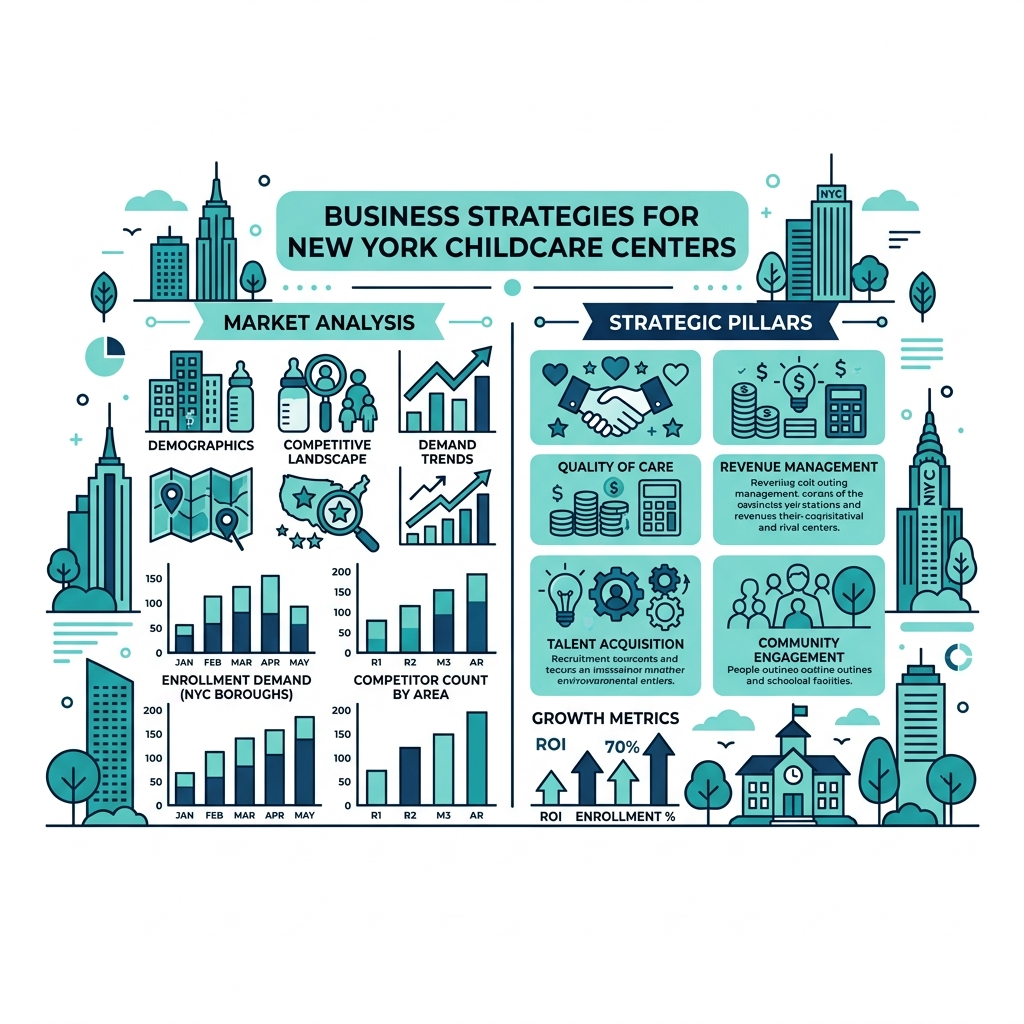

The landscape for early childhood education in New York is undergoing a massive transformation. With Governor Kathy Hochul’s recent $4.5 billion commitment to universal child care, the state is shifting from a fragmented system to a structured, state-supported model. For business owners in the child care sector, this represents a significant shift in operational strategy, funding opportunities, and market demand.
The $4.5 Billion Shift: What’s Changing?
The state’s strategy is built on a multi-pronged approach designed to stabilize the workforce and increase capacity. As a business owner, understanding these pillars is essential for long-term planning:
- Universal Pre-K Expansion: The state is targeting full universality for all four-year-olds by the 2028-2029 school year. Funding per pupil is being raised to a minimum of $10,000, providing a more stable revenue floor for centers that integrate into the public school framework.
- Subsidy Reform: The Child Care Assistance Program (CCAP) has seen a dramatic increase in investment, now totaling over $3 billion. Eligibility has been expanded to 85% of the state median income (roughly $114,000 for a family of four), significantly widening the pool of potential clients who can afford your services through state support.
- The “2-Care” Initiative: New York City is launching a pilot to offer free child care for two-year-olds, with the state fully funding the first two years. This creates a new market segment for providers willing to adapt their curriculum and safety standards for toddlers.
- Workforce Support: To combat staffing shortages, the state is introducing new Workforce Pell grants and streamlining early childhood education pathways through SUNY and CUNY.
Strategic Implications for Child Care Providers
For existing and aspiring child care business owners, these policy changes offer both a challenge and a massive opportunity.
1. Leveraging Capital Funding
The state has already deployed over $150 million in capital funding to support the creation of new seats and centers. If your business is located in a “child care desert”—an area with high demand and low supply—you are in a prime position to apply for state-backed facility grants or renovation support. The Irene Skalny Childcare Center in Penfield, which received $1.5 million in state funding, serves as a blueprint for how public-private partnerships can revitalize local infrastructure.
2. Aligning with Reimbursement Rates
One of the most critical business metrics for any center is the reimbursement rate. New York has increased these rates by nearly 50% over the last four years. When building your business plan, prioritize centers that can accommodate CCAP-eligible families, as the state’s commitment to capping family costs at $15 per week ensures a steady, reliable stream of enrollment for your facility.
3. Operational Focus: The 0-3 Demographic
The state’s current pilot programs in Monroe, Dutchess, and Broome counties are specifically focused on children aged 0-3. Historically, this age group is the most expensive to staff due to lower required teacher-to-child ratios. With the state now providing targeted pilot funding to offset these costs, the “0-3” market is becoming significantly more profitable and sustainable than it was in previous years.
Preparing for the Future
The creation of the new Office of Child Care and Early Education signals that this is not a temporary stimulus, but a permanent structural change. Business owners should prepare for:
- Increased Compliance & Quality Standards: As public funding increases, so will the requirements for reporting, curriculum standards, and teacher certification.
- Intergenerational Models: The success of centers like the Irene Skalny facility—which utilizes intergenerational programming—suggests that the state favors models that integrate into the broader community fabric.
- Tax Credit Utilization: The expansion of the child and dependent care tax credit will likely drive higher demand from middle-income families, allowing providers to maintain higher occupancy rates.
By aligning your business development with these state-level priorities, you can secure your center’s financial future while contributing to the state’s goal of making New York the most affordable place to raise a family.