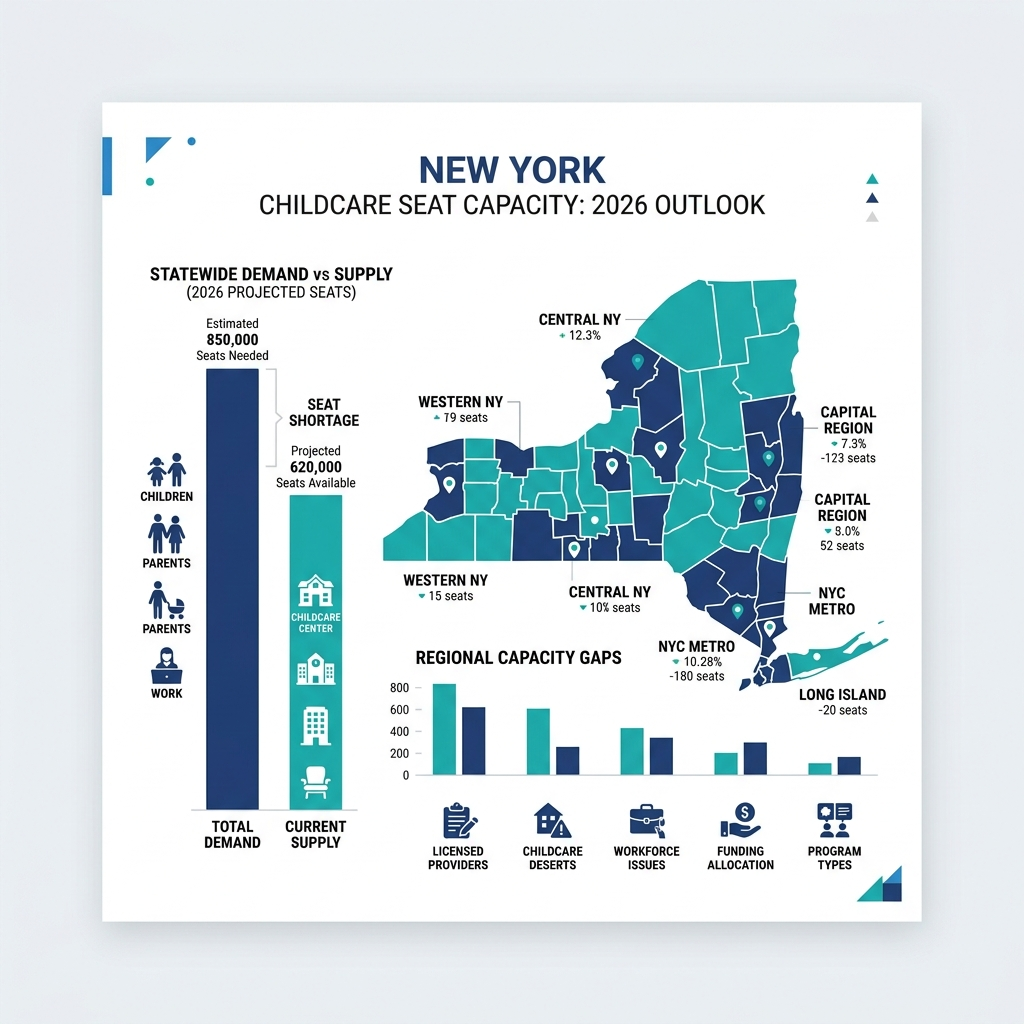

The landscape of workforce stability in New York State is undergoing a fundamental shift. With Governor Kathy Hochul’s recent announcement of a $4.5 billion investment toward universal child care, business owners and HR leaders are seeing a direct link between state-funded social infrastructure and their own operational success.
For businesses, this isn’t just a policy update—it is a strategic opportunity to leverage a more stable, available, and productive workforce.
The Economic Case for Child Care Access
The state’s new pilot program, launching in Monroe, Dutchess, and Broome counties, targets a critical pain point for employers: the “child care desert.” When employees cannot find reliable care, absenteeism rises and retention drops.
Data from the state’s recent initiatives highlights the scale of this intervention:
- Expanded Eligibility: The maximum income threshold for child care subsidies has been raised to 85% of the Statewide median income—roughly $114,000 for a family of four.
- Cost Reduction: For the 170,000 children currently served by the Child Care Assistance Program (CCAP), most families now pay no more than $15 per week.
- Workforce Participation: The state has seen a 25% increase in children served by vouchers in the last 12 months alone, directly enabling more parents to remain in or re-enter the workforce.
- Provider Support: Reimbursement rates for child care providers have been increased by nearly 50%, a move designed to stabilize the supply of available seats.
Strategic Implications for New York Businesses
As the state moves toward universal Pre-K by the 2028-2029 school year and launches the “2-Care” initiative in New York City, businesses should adjust their internal strategies in three key ways:
1. Re-evaluating Employee Benefits
With the state expanding subsidies and tax credits—including an average benefit of $575 for 230,000 tax filers via the expanded Child and Dependent Care Credit—employers have a chance to pivot. Instead of carrying the full burden of child care assistance, companies can focus on “wrap-around” support, such as flexible scheduling or partnerships with local providers, knowing that the state is covering the primary financial barrier.
2. Geographic Talent Planning
The pilot programs in Monroe, Dutchess, and Broome counties are specifically designed to stimulate local economic vitality. Businesses located in these regions should monitor the rollout of new seats at centers like the Irene Skalny Childcare Center. As these “deserts” are filled, the local talent pool will become more accessible, particularly for roles that require consistent, on-site presence.
3. Workforce Development Partnerships
The state is directing SUNY and CUNY to streamline early childhood education programs. For businesses in the education or human services sector, this creates a pipeline of qualified labor. For other industries, it represents a more stable workforce, as the state’s new Office of Child Care and Early Education works to ensure that the “workforce that makes it all possible” is supported and expanded.
Looking Ahead
The “MomSquad” and state leadership are betting that by removing the barrier of child care, they can unlock billions in economic productivity. For the business owner, the takeaway is clear: the cost of labor instability is being addressed at the state level.
By aligning your recruitment and retention strategies with these new regional investments, you can better position your company to benefit from a workforce that is finally getting the support it needs to thrive.