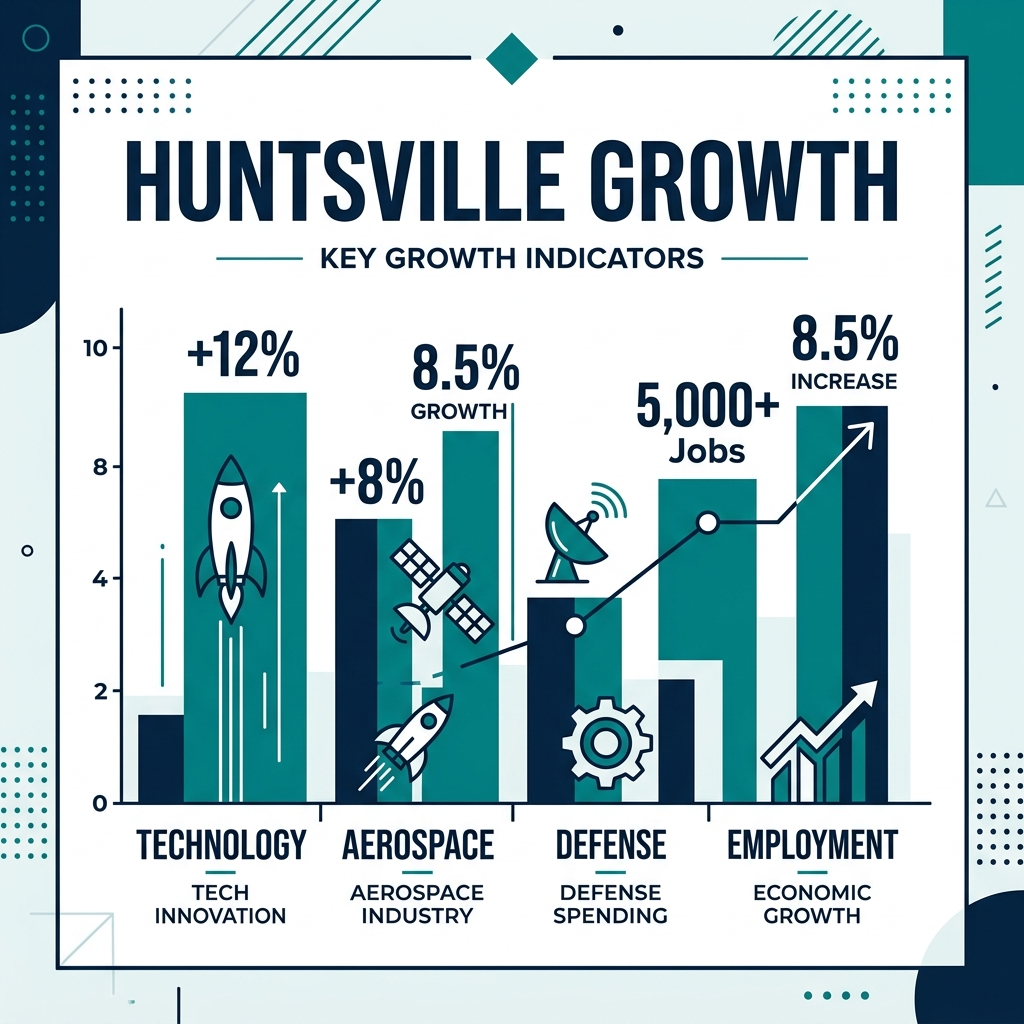

The national conversation surrounding economic stability has shifted significantly as we move through 2026. With a recent WalletHub taxpayer survey revealing that 78 percent of Americans are now more concerned about affordability than their actual tax burdens, cities across the country are facing intense pressure to maintain livability. In this climate, Huntsville, Alabama, has emerged as a compelling case study in balancing rapid expansion with long-term economic health.
The Affordability Paradox
Huntsville is currently navigating what economists call the “affordability paradox.” As the city attracts roughly 18 new residents every day, the resulting demand creates upward pressure on prices. However, the region remains a bastion of relative stability.
Data highlights the scale of the challenge:
- Cost of Living: Alabama’s overall cost of living remains 9-11 percent below the national average.
- Housing Value: Despite population growth, Huntsville’s home prices per square foot remain approximately 25 percent lower than the national average.
- Resilience Ranking: CardRates.com recently ranked Huntsville as the most financially resilient metropolitan area in the United States for 2026, awarding it a score of 82.1.
Proactive Planning and Supply Management
Unlike many high-growth cities that were caught off guard by sudden demand, Huntsville’s urban planning department began preparing for these pressures years ago. Dennis Madsen, the city’s manager of urban and long-range planning, has emphasized that supply is the primary lever for maintaining affordability.
Since 2020, the city has added 16,000 apartment units to its inventory. By encouraging a diverse mix of housing—including townhomes and “missing middle” developments—the city has successfully mitigated some of the extreme price spikes seen in other tech-heavy markets like Austin, Texas.
The Road Ahead: 2026 and Beyond
While current indicators are positive, the region faces a significant infrastructure challenge regarding land development. According to the February 2026 MarketGraphics report, the Huntsville region currently has about 12,400 developed residential lots available. Projections suggest that by 2031, the region will require nearly 36,000 lots to keep pace with growth.
The breakdown of projected needs highlights the regional nature of this demand:
- Madison County: Estimated need for over 20,000 additional lots.
- Limestone County: Estimated need for more than 9,000 additional lots.
External Economic Pressures
The city must also account for major economic catalysts, such as the relocation of the U.S. Space Command, which is expected to bring over 1,000 high-skilled jobs to the area. While these projects drive economic prosperity, they also necessitate a continued commitment to housing development.
For now, Huntsville’s strategy of aggressive supply-side management and economic diversification appears to be working. As the city continues to grow, the ability to maintain its affordability index—ensuring that the median household income can comfortably afford the median-priced home—will remain the ultimate test of its economic resilience.